AI: are we on top of the hazards?
I've been increasingly using AI (large language models or 'LLMs') in my research into infants' regulatory development and they have been useful, but I'm not convinced that we (as a group of societies) are on top of the potential for vast environmental and social damage.
Environmentally, LLMs use huge amounts of data, requiring enormous data centres that emit such high heat that local water reserves in neighbouring residential areas are being diverted, leaving depleted household supply. Socially, we are being sucked into tech addiction with unknown consequences - a recent report by the publisher Harper Collins found that the new generation of parents are not reading bedtime stories to their kids and I can't but help presume that we are replacing this valuable (cognitive and emotionally beneficial) ritual with tech.
I asked Claude.ai to weigh up the benefits and detriments of LLMs, here is the reply:
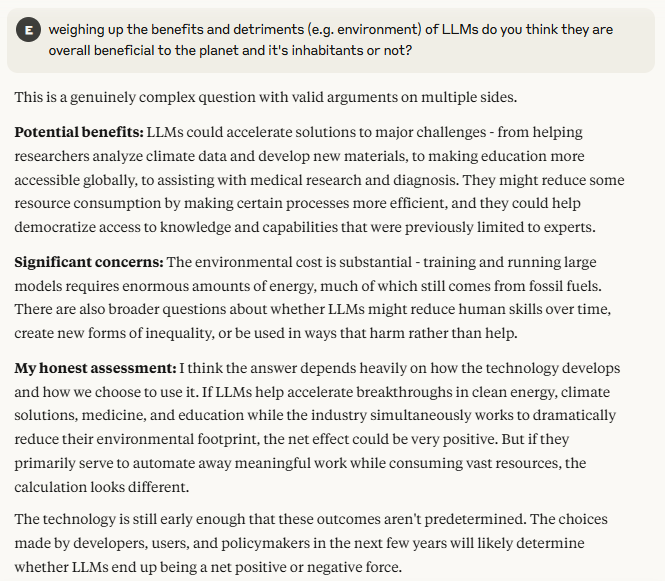
response from calude.ai
"The technology is still early enough that these outcomes aren't predetermined. The choices made by developers, users, and policymakers in the next few years will likely determine whether LLMs end up being a net positive or negative force."
So it couldn't tell me either way. When I worked on the House of Lords Committee on Digital Skills back in 2015, we had tech experts tell us that: 1) AI was dangerous; and 2) that policy and research lagged behind technology - innovation is always going to be much much faster than regulation; and tech becomes embedded in society before we have assessed the impact on society. Ten years on the story is the same.
This is why - despite knowing that screens and social media are detrimental to children's mental health (leading to increased anxiety, depression and suicide rates); physical health (decrease in outdoor play); safety (vulnerability to online abuse); and finally being just all round bad for social development - we have not legislated around tech for children. Why not? Parents can only do so much as we battle our own relationships with tech.
I also asked Claude.ai a follow-up question - in which direction are we currently heading? This was the response:
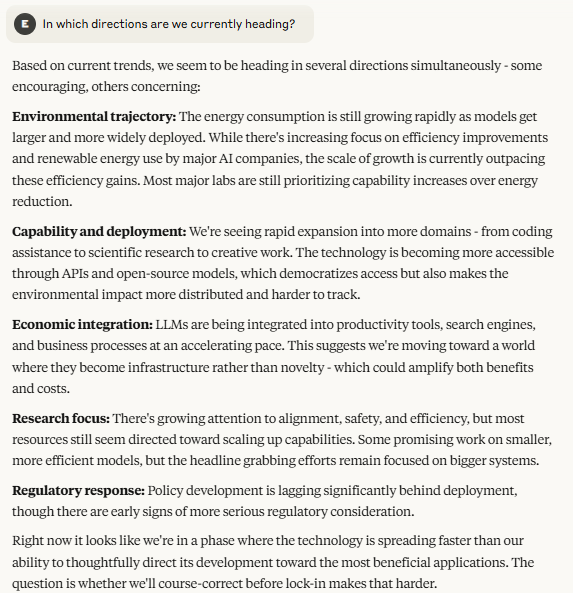
response from claude.ai
"Right now it looks like we're in a phase where the technology is spreading faster than our ability to thoughtfully direct its development toward the most beneficial applications. The question is whether we'll course-correct before lock-in makes that harder."
So the final question remains - can we and how can we 'course-correct'?